Monday, May 8, 2017

Sermon for Fourth Easter 2017

Preached at Grace and Canadochly on May 7, 2017
Originally preached at St. John's, Davis, WV on May 3, 2009
Preaching text: John 10:1-10

Back when I was growing up, one of my favorite video games was the Ultima series on the PC. On the surface, the game seemed to be the usual sword-and-sorcery stuff that you’d find in many games today, but Ultima was different. Ultima was the first real attempt at integrating a moral framework into the story of the game. It wasn’t just enough for you to defeat the monsters. You also had to prove to the “people” that you were a good guy, a true hero, full of all the right heroic virtues.


There were seven of those virtues: truth, compassion, valor, honor, etc. Each character class represented a specific virtue; the knight represented honor, the magician truth, and so forth. To master the virtues, you had to collect teachers and guides from each of these classes to help you. It was an innovative storyline and the Ultima games gained accolades for trying to do something more than just “hero-fights-dragon-and-saves-the-day.”

The hardest virtue to master was humility. You had to search far and wide across the land to find your teacher in that virtue. She was located on a remote island in the middle of the ocean, on the outskirts of a ruined town. Only there could you find Katrina, the shepherd, with her flocks.
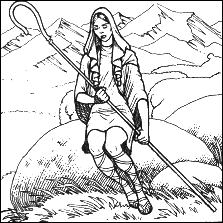
A shepherd? That seems a bit odd, even after playing through these games all those years ago. A shepherd isn’t exactly what you expect to see standing beside a wizard, and a knight, and an archer, and all these other fantasy tropes. But the more I think about it, the more I can’t help but wonder if Richard Garriott, who designed these games, didn’t draw upon our Scriptures for his inspiration.
After all, the Bible is full of shepherd heroes. Moses, after he flees Egypt, comes upon the lands of Jethro of Midian. He marries his host’s daughter and settles into a comfortable life as a shepherd of his father-in-law’s flocks. At least until he has an encounter with flaming plant life and then is send forth to liberate God’s people from bondage.
King David wasn’t always royalty. When the prophet Samuel comes to his father Jesse’s house to anoint the new king, David is absent. He is out in the fields tending the sheep. Of course, it is not much later that this shepherd boy makes his public debut in one of the most famous stories of the Bible. The Ultima series may have taken the story of David and Goliath as its inspiration, because David faces down the giant without armor or weapons, but only with humble faith. His taunt of the giant proves this out: You come to me with sword and spear and javelin; but I come to you in the name of the Lord of hosts, the God of the armies of Israel, whom you have defied. This very day the Lord will deliver you into my hand. David takes no credit for his victory over Goliath, but humbly points to God as the true victor.
Not only do the shepherds act as heroes, but they are common image in prophecy and poetry. Most of us have memorized the 23rd Psalm. God often speaks through his prophets of being shepherd to his people. Jesus himself uses the image of shepherd in his parables: “Which of you having 100 sheep and losing one…
Why is the shepherd so upheld as a paragon in our Scriptures? So much so that when Jesus settles on an image and a metaphor to describe himself, he says he is the “good shepherd.” We hear these images a lot, but do we really think about what message Jesus is trying to get across here? Why a shepherd?
Maybe the Ultima series may be onto something when it figures the shepherd in its games as a paragon of humility. What is humility anyway? Seeing others as more important that yourself. Placing others before yourself. The shepherd does just that, for he places the lives of his flock before himself. He has to, in order to do his job.
Sheep are not exactly the smartest animal on this planet. Nor are they particular powerful or fast or anything else that might spare them from the belly of a hungry predator. The only thing standing between them and a devouring wolf is the shepherd. And think about the armaments here. The wolf with his ferocious speed, sharp fangs, and claws versus the shepherd with a staff of wood and a sling. Doesn’t look like a fair fight in a lot of ways. Odds are good that if it really comes down to it, the shepherd is going to get hurt or even killed to protect those sheep.

That’s only made worse by the fact that the shepherd truly puts themselves in harm’s way. “I am the gate of the sheep.” Jesus says. Indeed a shepherd was. They would go to sleep at the mouth of the sheep fold (usually a cave) so any sheep trying to get out would run into them. But also anything coming in, like that wolf.
You had to be dedicated to do that sort of work. You had to be willing to risk life and limb to protect those sheep. You had to put that flock before yourself and be willing to die for it if need be. That’s humility, humility enough to die for the flock.
Jesus therefore is saying that he will do the same. That he will place us, his flock, before himself, and that he lay down his life for us.
Now wrap your brain around that one for a second. Jesus is God incarnate. He was present in the very creation of the universe. It was he who fired up that burning bush that sent the shepherd Moses forth to liberate his people. It was he who guided David’s stones to the temple of the giant. It was he who healed the sick, made the lame to walk. It was he who was perfectly obedient to the will of the Father. If anyone in the world has entitled to be top dog, to be the one for whom we should give our all, it is Jesus. He’s earned it. He is the best there is. We should rightly bow down before him and yet his attitude toward us is not to lord over us his superiority, but instead to lay down his life for us. To be willing to die to save us. To be humble before us, even unto death.
That is what the Good Shepherd does for his flock. What Jesus does for us.
The creator of the universe gives of himself for the sake of his creation. The shepherd gives of himself for his flock. The Christ dies on a cross for his people. This is the simple message Jesus seeks give to us, that in his mind we are worth more than he. That we are worth dying for. That is the reason he came, to give up his very life so that we foolish sheep can live forever. That is what the Good Shepherd does. Christ lays down his life for us. Amen.

Monday, May 1, 2017

Sermon for Third Easter

Preached at Grace and Canadochly on April 30, 2017
Preaching text: Luke 24:13-35

Luke Skywalker. Farm boy in a galaxy far far away. He begins a journey that will take him across the stars, rescue a princess, destroy a villainous super-weapon, discover his family origins, and make him come to realize that he is the “chosen one” who will save the galaxy. Quite a road trip, huh?


Frodo Baggins. Simple hobbit in the Shire. He begins a journey that will take him across Middle-Earth, battle orcs, destroy a villainous super-weapon, discover his true friends, and make him come to realize that he too is a “chosen one” who will save the world. Quite a road trip, huh?


Allen Schwarz. Nerdy kid from Charleston, WV. He began a journey at age 17 that would take him across the East Coast, from Blacksburg, VA to Albany, NY. Now I haven’t blown up any super-weapons, and I haven’t quite saved the world yet, but the last 25 or so years have been quite the road trip.

Me at around age 16-17 with my friend Jen.

What’s your road story? You began as something, the child of your parents, growing up where you grew up. But at some point in your life, you headed out on your own. Perhaps it was military service or college or maybe even nothing more complicated that a vacation trip somewhere. But whatever it was, it helped mold you into the person you are today.

The road story is one of the most common stories in human mythology and folklore. It’s all over the place. Popular books, movies, and TV shows are often road stories. The Walking Dead is a road story. Portions of Game of Thrones are road stories. Harry Potter is a road story, especially the last book. Star Wars, Star Trek, Lord of the Rings, Ben-Hur, Dune, Superman, The Lion King, Frozen, The Princess Bride, Narnia, all of them are road stories. A character begins a journey, goes someplace new, and is changed into who they are meant to be by their experience on the road.

It should probably them come as no surprise to discover that many of the stories in our own Bible are road stories. Joseph and his dreamcoat is a road story. Moses and the Exodus is a road story. Elijah is a road story. And the Gospels themselves.

How many of Jesus’ important encounters occur on the road? How many miracles happen on the road? How many parables are told? Even his birth is a road story. And, of course, his death and resurrection.

But the Gospels are not just Jesus’ road story. It’s also the road story of the disciples. Peter, James, John, and all the rest leave everything behind to follow Jesus wherever he goes. And he goes a lot of different places, from one end of Palestine to the other. North to South, East to West. In every encounter Jesus has, the disciples discover something new about themselves. They are becoming something new. They are becoming who they are meant to be. Who God intends them to be.

And so it is with today’s portion of those Gospel stories. On Easter afternoon, two disciples, not coincidentally, find themselves on the road from Jerusalem to the village of Emmaus, some 7.5 miles distant. They encounter a stranger who seems at first oblivious to recent events. But as the three converse, the stranger soon reveals a depth of knowledge that surprises the two disciples, explaining in great detail God’s plan in Jesus Christ.

The two disciples, saddened by the news of Jesus’ death and disappearance, are re-energized by this experience. They encourage the stranger to remain with them overnight and as they break bread for supper, the two disciples realize their companion is no stranger at all, but Jesus himself. Ecstatic beyond words, the two men pack up and read back to Jerusalem to bring news to the others.

It’s easy to trace the growth of these two men across the course of the afternoon. They go from despair and sorrow to exuberance and joy as they travel their road. They are renewed, perhaps even remade, into new people by their experience. They thought their story was over, with Jesus dead and gone. Now, they realize it is just beginning.

So what about us? As I implied at the beginning, we too are on our own journey, our own road. Who we once were one, five, ten years ago is not who we are now. Circumstances have changed. We have changed. And maybe we don’t think it’s for the better. We’ve lost. We’ve been hurt. All around us seems dark or at least darker than it once was.

We’d hardly be alone if we believe that. A lot of people have been thinking that. Last year’s election was an effort, right or wrong, to try to steer our nation in a different direction. But the funny thing about road stories is that things are always the darkest just before the hero wins.

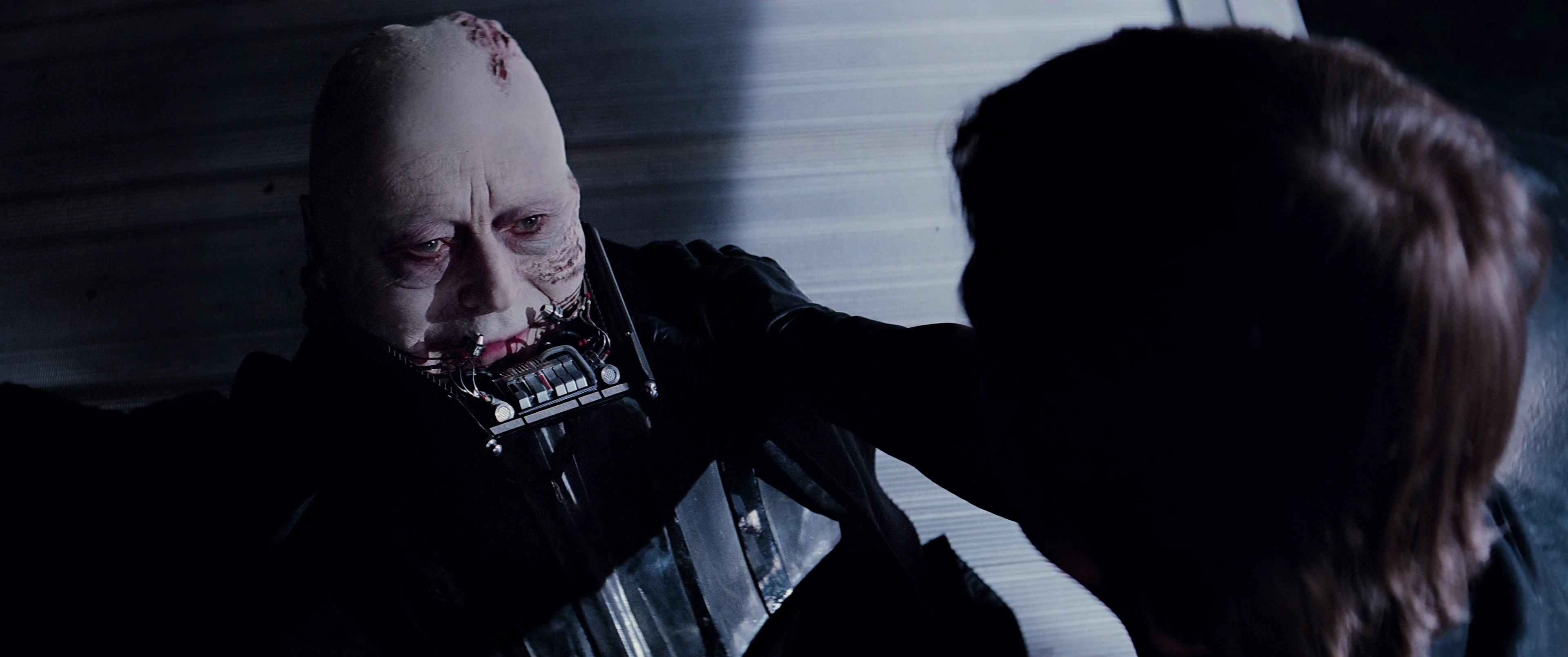
Luke Skywalker stands before the Emperor, thinking he’s doomed to die by the hands of his enemies.


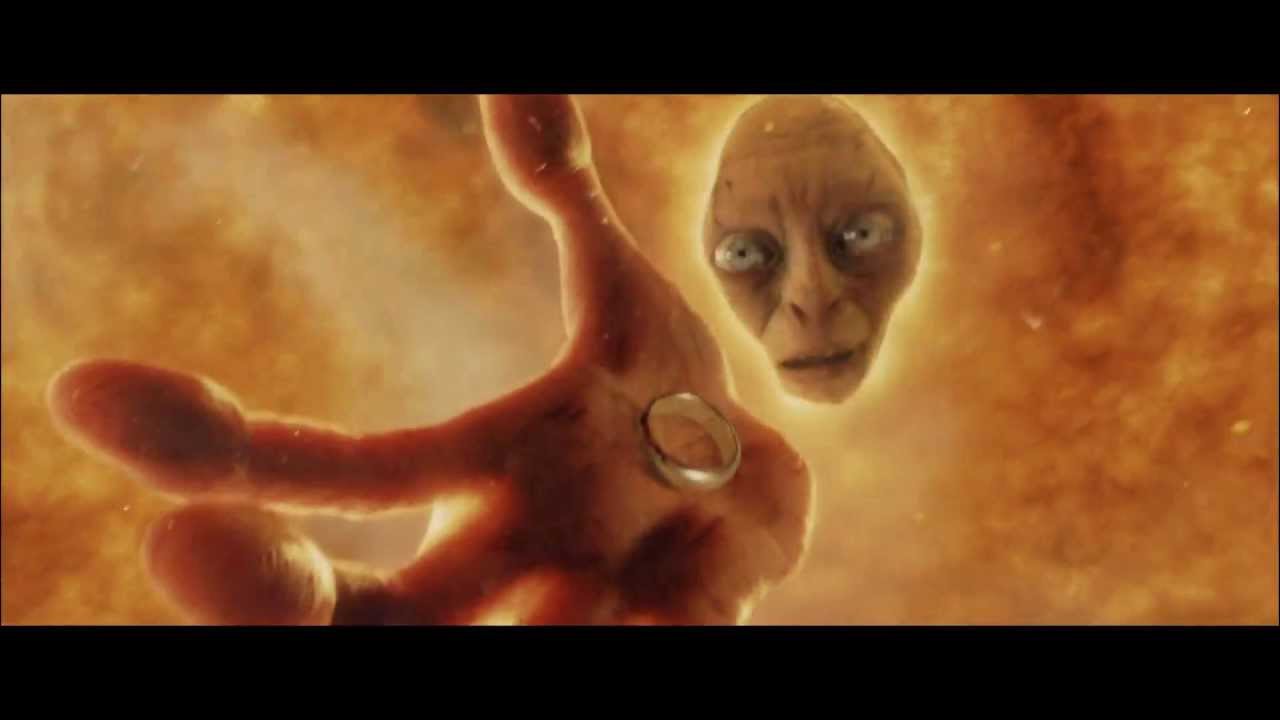
Frodo sees the ring snatched from his hand by the devious Gollum at the last minute.


Harry Potter is hit with the killing curse.


Wesley (from the Princess Bride) is “mostly dead.”


Judah Ben-Hur caves into vengeance and becomes the very thing he despises in Messala.


And Jesus is dead on a cross.


But then the hero wins. Seemingly out of nowhere. The Emperor is defeated and Darth Vader redeemed.


Gollum falls into the lava and destroys the ring.


Harry Potter survives the curse yet again and goes on to defeat Voldemort.


Wesley comes back thanks to Miracle Max.


Judah remembers himself.


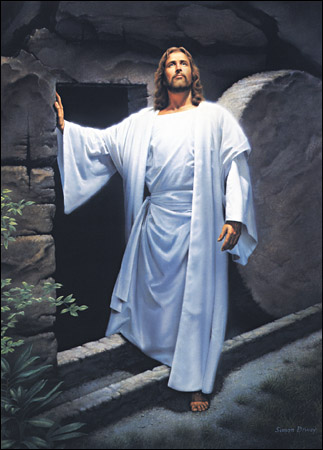
And Jesus rises from the dead.


And these two disciples witness it in the breaking of the bread. Good has triumphed. All is set right. All is made new.

Nothing is the same anymore and that’s a good thing.

So it is in our lives. We encounter Jesus on our road all the time. We meet him in the Word, in the sacraments. We meet him in each other, in beauty of nature, the melody of a song. We meet him in times of triumph, and most keenly, in times of trial. And when we encounter him on our roads, we are changed. The world is not the same anymore. It’s not meant to be. Because Good has triumphed. Death and evil are defeated. Life has the last word. Who we were is no longer who we are. We are something new. Something better. We are children of God. We have won.  Amen.

Monday, April 24, 2017

Sermon for Low Sunday (Second Easter) 2017

Preached at Grace and Canadochly on April 23, 2017
Scripture text: John 20:19-31

“The world is full of death, but Christ is risen! Do not fear!’

I repeated that cadance several times in my sermon last week, driving home what I believe is the central meaning of Easter. Christ is risen. This world of hate, fear, and death has been put asunder in God’s grand plan for his beloved people. All is well, even if it doesn’t always look like it. Good has won. Life has triumphed. All is as it should be.

And it seems to be quite obvious that the Eleven disciples, those closest to Jesus during his earthly ministry, did not get the memo.

“It was the first day of the week and the doors of the house where the disciples had met was locked for fear of the Jews.” I can say that line from memory practically; I’ve preached this text so much. But that’s beside the point. You’d think they’d know! It’s not like Jesus didn’t tell them it was going to happen. But there they sit, hiding away from the world because of the one thing the angels told the women not to do. They were afraid.

On one level, it’s hard to blame them. What was real to them in that moment? They knew their master and teacher had died a horrible death on a cross. They knew he’d been set up, betrayed by one of their own to a conspiracy of religious leaders and Roman authorities. It was possible, perhaps even likely, that the same conspiracy of the powerful and wealthy was now hunting them as well.

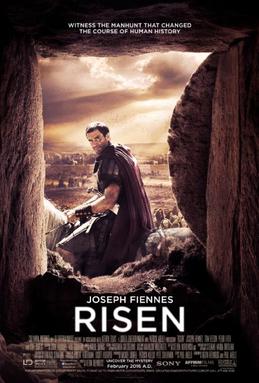
Instead of attending our ecumenical Lenten service on Good Friday, I took the opportunity to join my wife, daughter, and in-laws for their Good Friday plans. They, and consequently we, were going to a friend’s Methodist church where they were showing the film Risen. The film explores this possible reality that the disciples were hiding from, showing us a concerted effort by the Romans and the Sanhedrin to find and destroy this “cult of Yeshua.” Soldiers in the street, interrogations, threats of torture, arrests, and all manner of frightening and fearful acts by the authorities to bring the infant church to heel in the days after Jesus’ crucifixion.


Was it really like that? I don’t know, but I can tell you most of the disciples thought it was. Thus, they were hiding away in a locked room, hoping the soldiers, like the angel of death at Passover, would pass them by.

Note however I said most of the disciples. One of their number is missing. The Scriptures don’t say why, but Thomas is not with them that night. Thus when Jesus makes his appearance before the disciples, he misses out.

This, of course, sets up the story that we have as our Gospel text today. Thomas returns, refuses to believe what his companions tell him about seeing Jesus, a week passes and then Jesus shows up and Thomas sees him. He is hence nicknamed “Doubting Thomas” and is held up as a paragon of what not-to-do when it comes to faith.

But I’ve always thought that an unfair characterization of him. There are many reasons for that, but in my reading this week I may have stumbled onto a new one. And has to do the fact that Thomas is not behind that locked door on Easter evening.

The Scriptures don’t specifically tell us the reason why, but we do have a clue from an earlier passage. As I’ve pointed out in the past, Thomas is the #2 guy in John’s Gospel after Peter in terms of his interaction with Jesus. And if you rewind a week or two earlier in the narrative, back when Jesus and his disciples were still in Galilee awaiting word to the fate of Lazarus. They knew travel to Judea in the south was dangerous, and that’s where Lazarus was. When Jesus announces his decision to travel south to Lazarus and his family, Thomas speaks up. Let us also go,” he says, “that we may die with him.

That doesn’t sound like someone who is disloyal to Jesus or afraid of the consequences of following him. Perhaps that’s what’s going on Easter evening. Thomas is out there refusing to be afraid. He knew Jesus would likely die in going to Judea and Jerusalem. He knew that Jesus HAD to die to fulfill God’s plan. Everything that had happened was something Thomas had expected. There were no surprises there. But Thomas had dedicated himself, his whole life and being, to Jesus and his teaching. So when the moment of decision came, he wasn’t going to hide. He was going to keep on living his life as he’d dedicated it, regardless of whatever fate lay in store.

He’s a man of courage, not just doubt.

But, like all of us, Thomas is not perfect. Yes, he is unafraid. Yes, he is out and about when there could be the forces of the authorities looking for people like him. Yes, he understood Jesus had to die. What he did not understand was that Jesus also had to rise. Thus, when the others tell him of seeing Jesus alive, he balks. He doesn’t believe them.

Was Thomas a fatalist, expecting or perhaps even hoping to die along with his master? Maybe. Perhaps he saw no other fate before him and he was going to meet it head on. Jesus’ rising opened up a whole new possibility that he had never considered. And when Thomas finally sees Jesus, his eyes are opened to a whole new reality. No wonder his words to his master and friend in that upper room are so full of astonishment and amazement, “My Lord and my God.”

To Thomas, perhaps we could say, “The world is full of death and we know you’re not afraid of it coming for you. But Christ IS risen and there is another way. A way of life.”

And that brings us around in many ways to where we were last week. There’s death everywhere and it will come for all of us eventually. But Christ is risen and our way is life. Our faith is life. His work is life. All that has happened has done so to bring us life, life abundant, life eternal.

Thomas has a lot to teach us. Go forth without fear. That’s what he did, without knowing why. We know why. There is no need for fear. For Christ is risen indeed. Alleluia. Amen.

Sunday, April 16, 2017

Sermon for Easter Sunday 2017

Preached at Canadochly Lutheran and Grace Lutheran on April 16, 2017
Preaching text: Matthew 28:1-10

Ten years ago, a deranged young man took two handguns and entered into West AJ dorm at Virginia Tech. There he shot and killed two students. An hour or so later, he entered Norris Hall, one of the academic buildings on the opposite side of campus from AJ and began a killing spree that killed 31 other people, including himself. Virginia Tech is my alma mater. It was my home for five years of my life. And what that psychopath did left a scar on all of us Hokies.


Death is all around us.

The news is full of it. We dropped the MOAB this week, the “Massive Ordnance Air Blast” bomb or as the soldiers like to call it the “Mother of all bombs.” We fired missiles into Syria last week. All because the Syrian tyrant gassed his own people, providing echoes of the nightmare of the Holocaust 65 years ago (as our Press Secretary rather awkwardly helped remind us.)


Death is all around us.

I even watched a video of a little girl in Arizona, prancing about the lobby of a hair salon when two bullets from a drive-by shooting whizzed past her. One to the left of her head, the other to the right, both missing by mere inches. A four year old girl nearly murdered by two criminals who were trying to shoot the tattoo parlor next door and missed.


Death is all around us.

And to this world of Death, we speak this day a word of hope. Three words really: Christ is risen!
CHRIST IS RISEN!

Sometimes we find ourselves choking out those words in the midst of tears of sorrow or trembling of fear. Because death is all around us. Its power seems undeniable, invincible, unstoppable. But it is not so. Christ has proven that. He’s shown us who is the true power of this reality. That death has no hold upon our God. The same God who created us. The same God who daily in every way he can tells us that he loves us. The same God who sent Jesus Christ into this world to show us what that love looks like. The same God who in Christ died on that cross for our sake. The same God who in Christ walked out of that empty tomb on this morning so many centuries ago.

Christ is Risen!

The women who went to the tomb that morning were not expecting anything unusual. Jesus was dead. Pilate had posted guards to keep anyone from stealing the body, no doubt adding an element of intimidation to what would otherwise be a routine funerary rite of bringing spices and ointments for the body. Death was very present in that moment, from the weapons on the hips of the soldiers to the silence of that tomb to the soft weeping of the women as they journeyed to it.

Death was all around them.
And yet into this moment of death came a miracle. The stone rolled away. The angels appeared. The soldiers were stuck catatonic. And those angels brought a message. “Do not fear. He is risen.”

Do not fear. Christ is risen.

Astonished, the women begin to hurriedly return to the others of their company. To Peter and James and John and the rest of the eleven. On the road, they encounter Jesus himself. Shocked to see him alive, the women are beside themselves. They fall before him and Jesus speaks.

“Do not fear. I am risen.”

Earlier this week, I was meeting with my colleagues and discussing how we were going to preach today. I shared with them the mirthful phrase that I’ve said to all of you on numerous occasions, that the Bible can be summed up by God telling us “Chill, I got this.” And while that phrase may make you smile a bit at its humor, it’s true. It’s true because it is essentially a paraphrase of “Do not fear. Christ is risen!”

Scholars have long argued that the two most important words in all of the Bible: Μὴ φοβου or “fear not.” That phrase appears twice in our Gospel text alone and roughly 110 other times in the Scriptures. But how can we? Death is all around us. Yes, but Christ is risen. Do not fear.

There it is, folks. The whole width and breadth of the Scriptures. The entirety of God’s plan for his people in a handful of words. It’s the whole reason for the Old Covenant, the promise made to Abraham that from him would come a blessing for all people. That blessing is Christ, God incarnate, born of a virgin, lived, taught, went to the cross, died, and then rose again for the sake of you, me, and the whole world. Yes, the world is full of death. But Christ IS risen. The plan has come to fruition. All is as it should be and all will be set right.

Death is all around us. But Christ is risen! Do not fear. Amen.

Monday, April 10, 2017

Sermon for Palm Sunday 2017

Preached at Grace, York and Canadochly on April 9, 2017
Preaching texts: 1 Corinthians , Matthew 28

Pastor's Note: This concludes our Small Catechism preaching series. We'll back on the regular lectionary next week for Easter.

January 28, 1986. Do you remember where you were that day? I do. I was in the office of the librarian at John Adams Jr. High School. Weezie, we called her behind her back, but I don’t remember her real name. She had been kind enough to allow a few of us into her office to watch the space shuttle launch on the little TV she had there. And I got to see live when the Challenger exploded, killing all aboard.

From CBS News

November 22, 1963. Do you remember where you were that day? I was not yet alive, but the Kennedy assassination was to the Baby Boomers what the Challenger explosion was to Generation X.

From CNN

September 11, 2001. We all remember where we were that day. I was just starting as a new pastor in my first church in WV. Three months into that call. I was preparing Sunday School lessons when the horrible news came to me. You were, well, wherever you were.

From Business Insider

Why am I recounting these nightmarish moments of history? Because in each one of them, a figure of some import came on the TV, came before us wherever we were, and provided solace and assurance in the midst of the nightmare. For my parents’ generation and for many of you, it was Walter Cronkite visibly weeping over the Kennedy assassination.


For me and my generation on the day the Challenger blew up, it was President Reagan.


For all of us on 9/11, it was President Bush.


There they were, giving voice to what we were all feeling. Embodying the sorrow of the nation. And in doing so, they made us feel just a little bit better. We’re not alone. Others feel this way. Important people feel this way. We’re in this together.

And that is also precisely what the sacraments are about.

We humans are a funny lot. We so easily forget truths that are staring us in the face all the time. The disasters I listed, from a purely statistical standpoint, did not kill many people. None of us, wherever we were, were in any danger. Yet we were afraid. We were shocked. We were hurting. We had forgotten the truth in that moment of crisis. The truth that we were okay, that we were going to be okay, that our nation, our society, our people are more resilient, stronger, that we often give them credit. We would recover and live on. That’s what we forget.

Here in the Church, we can also forget the truths of our faith. That God loves us. That we have been embraced and accepted by the Almighty. That we are saved. Life throws all sorts of things at us: illness, job loss, relationship troubles, break-ups, accidents, unexpected deaths, setbacks of all kinds. These discourage us and make us forget the fundamental truths that we embrace as Christians. They can trigger crises of faith. They can make us doubt and wonder if God is still out there.

So, to remedy that, Jesus has provided us two sacraments. Baptism, where a person is ritually washed with water, and communion, where we gather together to receive a small portion of bread and wine in “remembrance” (the word is deliberate) of Christ.

All religions have rites and rituals, but what makes the sacraments stand out is how they are anchored in the real. Water is something we can touch, taste, see, and hear. You see it flow. You drink it from your tap (or bottle, if that’s your preference). You let it cascade over your body when you bathe. I dare you to ignore the sound of it when it drip, drip, drips from a leaky faucet. In every encounter with it (and it is everywhere. One of the most common substances in the universe), we can be reminded of a moment when it was poured on our head and God said to us “You are MINE and always will be.”

The same with communion. We taste bread and wine. We hear it being poured or being ripped open (on a particularly crusty bread with some crunch.) We can see them, touch them. They are real and they remind us anew of the lengths God has gone for our sake. This blood shed FOR YOU. This body broken and torn FOR YOU. All for you and me!

Remember what you have forgotten. God loves you. God saves you. God is with you.

When the President came on the TV during those moments of crisis for our nation, there was something sacramental about it. He was present. He was there. He was real. We could see him. We could hear him speak. And it made us all feel a little bit better. It helped to remind us of the truths that we had forgotten in the moment of crisis.

That’s why we have the sacraments. Yet another gift from God. Real tangible things that connect us to truths barely believed and often beyond our understanding. Does God speak to you through water? Does he speak to you through the bread and wine of communion? He is trying and he is saying through things we can experience with our earthly senses. “You are mine and you always will be. I love you and I always will. I sent my son for you. I went to the grace and empty tomb for you. You are precious to me.” Hear his words, his truth, in poured water, broken bread, and sweet wine. Hear his words and remember once again. Amen.

Monday, April 3, 2017

Sermon for Fifth Lent 2017

Preached at Grace, York and Canadochly on April 2, 2017
Preaching text: Matthew 6:9-13

Last Sunday we began our journey through the Lord’s Prayer, looking at it through the lens of Luther’s Small Catechism. Luther drives home an important point with the prayer: These things we ask for are things that God will provide regardless of our asking. The kingdom will come. God's will will be done. Our daily bread will arrive. All simply because it is God’s nature to be generous and merciful with his people. He loves us and wants us to be happy.
Even Ben Franklin can see it. Evidence of God's love is everywhere.

The purpose of the prayer therefore is to make us aware of that generosity and to direct it to us. As I said, the prayer can be summarized as “Hey, God. You love me. You promised. FIX THIS!”

There is a certain presumption in the tone of that summary. That’s deliberate. Yes, it seems odd to make demands of the Almighty, but in many ways that precisely how God wants it to be. He is our loving father and he wants us to pray boldly in complete confidence. The very language of the prayer highlights this, although the English translation of the original prayer makes it so formal. Part of the blame for that can be laid at the Greek writing of these Gospel stories. “Father” or πάτερ (Pater) in Greek, but the original Aramaic word was אבא (Abba) or “Daddy.”

Imagine calling God Almighty, maker of the universe, “Daddy.” Well that’s exactly what Jesus teaches us to do. That level of affection and intimacy is what God desires. When our children come to us, they come in confidence, bold because they know our love for them. Emily bats her eyes at me, gives me that little girl smile, and I just melt. She’s my girl, my kiddo. I love her. That’s how it works with God.

Quite a few years ago now, but still a favorite picture of the two of us.

The prayer therefore serves two purposes. It makes us cognizant of God’s grace. His gifts come without our asking. It also makes us confident to ask all that we need of God because of his love for us.

There is however a third purpose to the prayer, a third “c-word” as it were. It is revealed only once we get to the 5th petition, but it is meant for the whole prayer. That word is challenge. The prayer challenges us.

“Forgive us our trespasses as we forgive those who trespass against us.”

I know we often say the prayer by rote, but this line really should give us pause. Forgive us as we forgive. I don’t think I like that standard. May God forgive me only as much as I forgive others? Ugh.

I certainly try to be the forgiving sort. But there are just some people... Can I forgive those in higher office whose policies and politics I believe cause harm to me and mine, not the least of which is a certain president who I think most of you know I don’t like or trust much? Don’t do a very good job of that. Can I forgive the greedy ravenous monsters of the business world who care more about money than people or this planet? I don’t do a good job of that either. Heck, I still bear grudges against many of the kids who bullied me as a child, despite the fact that they’ve all grown up and most of them have matured beyond those behaviors.

If the standard is how much forgiving I do with others, I do not measure up well. Most of us probably don’t. Thankfully, through, God’s grace is greater and more merciful than my own. But why then is this petition written this way? Because it is a challenge. God wants us to forgive as he does. He wants to bring our sense of grace towards others into line with his grace towards us.

And if that challenge applies to forgiveness, it applies elsewhere also. Daily bread? What can I do to ensure my neighbor gets his share of it? God’s kingdom? What can I do to spread that kingdom as far and as wide as possible? Deliver from evil? How can I help spare my neighbor the predations of this world? Time and again, we find that these petitions not only remind us of God’s love and mercy towards us, but they challenge us to extend the same to others in whatever way we can.

The Small Catechism is structured very deliberately. It begins with the Ten Commandments and the revelation therein of the reality of sin. We cannot measure up to God’s standard of righteousness. The Creed follows, giving us God’s answer to sin in his generous love, most potently seen in the life, death, and resurrection of Jesus Christ. The Lord’s Prayer, part 3 of the Catechism, is therefore our response to God’s action. We pray in confidence because of God’s love. And we LIVE for others out of gratitude for that love. The prayer becomes a guide on doing just that. It gives us cognizance, confidence, and challenge to live out God’s will for the world.

This is what it means to be Christian. We embrace our humanity, recognizing we will never be good enough to save ourselves. Thus God intervenes out of love for our sake. And we respond by living in confidence of that love and spreading that love to others in whatever way we can.

This is who we are. This is what we’re called to do. God lives for us. We live for others. God loves us. We love others. God provides for us. We provide for others. Every time we pray, we call ourselves anew into this reality, into this cycle of love, mercy, and generosity. That is the kingdom. That’s how it works. Amen.