Showing posts with label Youth Event. Show all posts

Tuesday, October 27, 2015

Sermon for All-Hallows 2015

Preached at St. John's Lutheran Church, New Freedom on October 25, 2015
Scripture Texts: Ezekiel 37:1-14


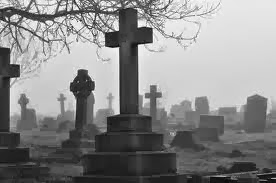
The ancients said of this day that the barrier between this world and the next grew thin and allowed the dead to walk among us. Traditions grew up around that myth and folklore, traditions that the Church later adopted when it made these days the celebration of All-Saints and All-Hallows. We don these costumes as mockery of those ghosts and spirits. What have we to fear of them? The lot of us are a lot scarier than they are. Or so we’d like to think.

But let’s be honest. Death is scary. It’s one thing we all face in life that there is no overcoming on our own. We can dodge it, avoid it for a time, but eventually it comes for all of us. What is it? What is it like to die? What’s on the other side, if anything? None of us really knows. Those are questions we don’t have answers to and they are questions we won’t have answers to until that moment it comes for us. Death is the true unknown and the truly unknowable.

But there is one thing we do know about it. We know that it hurts. Not necessarily for us when we experience it ourselves, but it hurts for those who are left behind. Those who grieve. Those who mourn. Many of us have had to say good-bye already to beloved grandparents or friends or someone else who mattered to us and if we haven’t yet, we will. The questions about what happens to us echo in our curiosity about their fate. What becomes of those who matter most to us when they die? Will we see them again? Will we be reunited? Again, those are questions to which we have no solid answers.

What we have instead is faith. Faith in a God who tells us time and again that death is his problem to solve and that he will take care of it. Faith in a God who says that we will be with him in eternity. Faith in a God who has sent his son into our world to live, to die on a cross, and to rise again on the third day. Faith in a God who has claimed each of us as his own through our baptism.

Just a few minutes ago, we heard the song Tourniquet by Evanescence. It’s a song that asks many questions, many of these same questions that we’ve heard in this sermon. Will God be there for us? Or is death really the end? Amy Lee’s lyrics sound like a fanciful paraphrase of Ezekiel. “Our bones are dried up, and our hope is lost; we are cut off completely.”


God’s answer to that is to bring bone together with bone and to breathe life where there is death. “Thus says the Lord God: I am going to open your graves, and bring you up from your graves, O my people...I will put my spirit within you, and you shall live.” That is his promise to us. That is what Jesus was about. That’s why he came. It’s why he died. And it’s why he rose again.

That’s what tonight is about. The light still shines in the darkness and the darkness has not overcome it.

At its core, that is what Halloween is about. This day is a remembrance of the dead, a remembrance that death is real. Much like Ash Wednesday, we are reminded that we are dust and to dust we shall return. And yet, we also remember in the midst of that reality that Christ has conquered death through his own death and resurrection. That life is stronger than death and life is what we are promised in the end. Eternal life. Life with God.

That is our faith. That is what we believe. It is why we are here on this night and every time we gather in worship. We gather to remember the promises, to celebrate what God has done for our sake. To remember that there will come a time when he will bring us home to be with him forever. Amen.


Tuesday, October 28, 2014

Sermon for All Hallows Eve

Preached at St. John's Lutheran Church, New Freedom, PA on October 26, 2014
Scripture texts: Ezekiel 37:1-19, John 19:16-30, Revelation 21:1-6


Fear. Terror. Horror. Death. Decay. Destruction. These are the themes of Halloween as we have come to understand them. It is a day of monsters and fright. A day of the spooky and macabre, the grim and the sorrowful.

It is good that we are here.

It is good because our society as it has evolved is of many minds about these festivities. Many Christians reject this holiday and its ghoulish traditions as signs of the demonic and the devilish. They believe the devil stalks the Earth on this night more than any other and to name him is to give him power. But that’s not how it works. If you fear a thing, THAT is when you give it power. To name it and claim it, you instead gain power over it.

As much as the Church struggles with how to understand Halloween, so too does our larger society. Halloween is, in many ways, society’s nervous laugh at the darker truths of reality. Nervous because, like much of the church, it fears those darker truths. It refuses to name death and decay, disease and misery, fearing that naming them will draw their attention towards us. But that is not how it works. In fearing them, we give them power. Power they neither merit nor deserve.

Tonight, we are gathered here to name those darker truths, to lay hold of them, and to gain mastery over them. We are here tonight to turn that nervous laughter to confident mirth. We are here to celebrate the core truth of this day that is often forgotten and ignored.

We are here to remember that death has no power over us. That death has been defeated.

That is what all this is about. What it is really about. All our modern Halloween traditions had their origins in the ancient church’s understanding of truth. They would gather on the night of the ancient pagan festivals of autumn and declare to death itself “You have no power here.”

The costumes we wear? The ancients wore likewise, saying to death “You think you’re scary. Let me show you what scary really is.” The grim imagery and frightening themes? Hah, the ancients used these to laugh at death, to make mockery of it, as do we.

We do not fear you, death. We can do scary better than you.

I remember another ancient truth. One I was told once and it has stuck with me throughout my life. The opposite of death is not life; the opposite of death is birth. Our lives hold to a pattern. Birth to death and then, in our faith, we trust and believe in a third step: rebirth or, as we Christians call it, resurrection.

Birth to death to resurrection. Our worship tonight follows that pattern. The Scriptures themselves follow that pattern. Our lives follow that pattern.

We begin with birth. We are born into a broken and fallen world, a world of pain and sorrow, sin and despair. A world that beats us down and does its best to drive out hope and joy from our lives. Oh, Lord, let these dry bones dance! Ezekiel’s vision becomes our prayer. Restore us. Give us back, O Lord, what the world has taken from us.

That prayer has not gone unheard. God has given his answer. God has given himself as answer, born of a virgin, incarnate as Jesus. He came into this world of brokenness and despair and he lived as we live. Learned and saw first hand the troubles and torments of life here on Earth. And, at the end, he gave God’s answer to this fallen world by dying upon a cross and rising again on the third day. “It is finished!” Christ declared from that cross and with those words, death saw its power vanish.

It’s all over but the crying.

John’s vision in Revelation reveals that to us. Because of Christ and his cross, because of Christ and his empty tomb, there will come a day when death will be no more. The powers of evil that we mock this day will see their final defeat. The dragon and the beast, all the monsters of this world both real and metaphorical, will see their end come at last: disease, sorrow, pain, hunger, poverty, war, bigotry, hate, and death all swept away in the glorious rebirth of the world.

Birth to death to resurrection. The cycle will come to its fulfillment through Christ.

Birth to death to resurrection. Death and evil cannot stop it. It is already won. It is finished.

We know this. We trust this. We believe this.

And thus, tonight we gather. We gather pretending to be werewolves and zombies. We gather pretending to be Pokemon and Ninja Turtles. We gather pretending to be fantastical creatures or popular icons of culture and we gather in the midst of darkness and blood because we know these things have no power. We name them and declare the truth about them. They are impotent. Powerless. They bear no threat. They are nothing compared to what Christ has done on his cross.

So let us laugh and have fun on this and every Halloween. Death is powerless. Evil has been defeated. Let us make mockery of their futile attempts to frighten us and drive us to despair. God has answered our deepest prayer. Our dry bones dance. Life is ours through the cross and empty tomb. Amen.

Tuesday, September 16, 2014

Mission Trip Presentation

Delivered at Canadochly Lutheran Church on September 14, 2014

---


I was asked to put together a presentation on our mission trip in July. Over the weekend of July 27, four members of St. John’s and two from Canadochly set off to the mountains of West Virginia, my home state, for a mission and cultural immersion experience. I had two goals in organizing that trip.
To tell a bit of the story of the mountains, their history, their culture.
To offer an opportunity to serve others in a context different from one that we might have here.

In many ways, those goals are informing the way I want to do this presentation today. So I want to begin with a question. What image pops into your mind when you think of Appalachia? Of West Virginia? What do the people who live there look like?


That’s the stereotype. The one we’ve all heard. The one we’ve all seen. The redneck. The hillbilly. Backwards, inbred, primitive, poor. But that is not reality. The people of my home state, my people, are a people of deep culture and passionate feelings. They take pleasure in family, faith, and beauty. They craft and build wonders.
 

This is Tamarack. One of the sites we visited during the trip. This is a marketplace for WV crafts and artistry.


We stopped there for lunch (It was delicious).


 Here’s a bit of WV culture already. Ramps are a wild onion that grow in the mountains and we West Virginians make everything out of them. So Ramp Salsa is available for sale at Tamarack. A literal taste of WV.

Here’s some more.


 Glasswork
 
Quilting.


Sculpture. This odd fellow was our neighbor while we ate lunch. I’m still not sure what it is exactly.


This is Charleston, the city that hosted us. This is a view of Capital Street with its shops and storefronts. Doesn’t look all that different than any other city anywhere else in the United States.


Our capitol building. Tallest of all capitols in the 50 states and taller than the national capital. That’s real gold filigree on the dome, by the way. We’re passionate about our artistry, as I said.


Our cultural museum. Sadly, we did not have the time during our visit to go inside.


 WV Artistry extends to the performing arts as well. This is a shot of Mountain Stage, a popular radio program of mountain folk music.


Of course, we have this passion for beauty because that’s what we see around us. Everywhere. This is Hawk’s Nest, one of our stops.


The New River Gorge with its famous bridge. Once the tallest standing bridge in the world, it spans almost 900 feet above the river below.
 
More of Hawks Nest


 Kanawha Falls. We passed this on the way home on Monday.


Some of our esteemed group at the New River Gorge.


 This was not one of the places we visited, but I slipped this in anyway (Call it personal privilege). This is Blackwater Falls. This is where I used to live when I served in WV for 11 years.

---

Just astounding natural and cultural beauty. But there is a dark side to all this. That dark side is summed up nicely by a word we use a lot in the church: sin.

Our faith teaches that we humans, when left to our own devices, will act in ways harmful to ourselves and others. Sin has been a part of the WV story as well. And this is what it looks like.


Poverty. Destitution. Environmental destruction. Exploitation. This is the dark side of the Appalachian story. And much of it can be laid at the feet of one business in particular: Coal.


You cannot talk about WV without talking about coal. The coal that powers the very electricity we use throughout much of this country was mined in the mountains of Appalachia. In the early 20th century, a miner could get a $0.20 wage per ton of coal that he mined.

And this is how he did it. On his belly, in the depths of the earth.


The ceiling could collapse. Poisonous gases could be released. He could get caught in an explosion. And all he got was twenty cents per ton of coal. The coal company sold that same ton of coal for around $5.

Some of that profit went to build schools like this one we visited.


It went to build towns, churches even. But most of it went into the pockets of the robber barons of that era; Only twenty cents of that $5 went to the miner and his family.


Scratch that, because that family had to buy most everything at the company store. His gear to do his job. The food you fed your family. Books for your children to use at school. All bought here and all at wildly inflated prices. Of that $0.20, the company got back pretty much all of it.

And all of this used to be legal.

The sin of the mountains is the sin of greed. And it is an insatiable sin at that.

Things are different now. The mines are safer…mostly. The wages are much higher. We toured an unused mine as part of our trip and this is our guide.


Even today though, our guide was adamant that being miner is NOT a job anyone truly wants. The greed of the coal business has been tempered somewhat, but it has not gone away entirely.

Now they do this to the land. This is what they call mountaintop removal.


Once they get the coal out, it is not unheard of for them companies to leave things looking like this.

Whatever they can get away with, they will. Greed doesn’t care about beauty. It doesn’t care about people’s lives.


This is Buffalo Creek. The site of the nation’s worst mine-related disaster. In 1972, a reservoir filled with waste water from local coal mines burst and rushed down into the Buffalo Creek valley. Over 100 people lost their lives and hundreds more were driven from their homes.


The sign makes clear that someone dropped the ball on Buffalo Creek. Neglect of safety practices. Safety costs money and that’s something the mine owners are not willing to spend. As a result, every year, people die from “ignored safety practices” in the mines and in the supporting industries.


This is a Google Street View of Freedom Industries. Last January, these chemical tanks, which stored chemicals used in the coal industry, leaked 10,000 gallons of poison into the drinking water of the very city we visited. Half a million people in WV had to use bottled water to even bathe for several weeks. And yes, it was due to “ignored safety practices.” Note however the billboard. Nothing unusual about a political advertisement, but this one is decrying the President and the EPA for having too many regulations. Too many safety rules.

Life, it seems, is not without a certain sense of irony.

That’s the history. The background. The legacy in this day and age of this sin, this greed, is rampant systemic poverty. Not only did we look at the causes of misery in the mountains, we got to see some of it first hand.


Trinity’s Table is a food ministry run by our host congregation, Trinity Lutheran in Charleston. Each Sunday, they prepare a meal for whoever walks through the door. Most of those who do are the poor and homeless of the city of Charleston. And they are numerous.


The program was started by congregation with the support of this gentleman, former Pastor Ron Shlack (right).

Some years ago, Pastor Ron and two other pastors took a bicycle ride across the whole United States to raise awareness for hunger and poverty issues. When he returned to his congregation in WV, the members proposed Trinity’s Table as one small way they could address the concern of hunger in Charleston.

Under the current pastor, Randy Richardson (who is somewhat camera shy, it seems. I do not have a picture of him.), the work has expanded. Each week, this church, whose average attendance is around 100 persons, puts together over 700 meals for those who come.


The meal is free to all comers. And you can get multiple servings. The Sunday we were there, we made burritos. 740 meals of burritos.


These are shots of us preparing those meals. A certain portion are set aside for people to take home with them, so they have a decent meal at some other point during the week.

The food is donated by congregation members and local businesses. Panera Bread, for instance, provides bread each week. The work is all volunteer.


Desert is included, of course.

740 meals. That number still staggers my imagination, even though we were there and we did that. And for the two hours we served, the line was constant. Unfortunately, that means I don’t have any pictures of our guests, of the people who came to eat.

It was quite a mix. There was one fellow dressed to the nines; tried to charm Shannon with a flower. Another fellow that looked like he’d stepped out of one of my vampire stories: Goth with the trench coat and makeup to match. Families with kids. The whole gamut.

St. Frances was said to have instructed that we “preach the Gospel always. If necessary, use words.” In many ways, that’s what we did. We stared evil in the face; we saw the legacy of greed that has pillaged its way through a beauty land and a beautiful people. But the Church was there, showing that evil does not have the last word. That there is Gospel in a hot meal and a cold drink even in the midst of poverty and suffering. We were a part of delivering that good news to hundreds of people, just as the congregation of Trinity does every week.

This is what the Church does. In West Virginia, here, and everywhere in the world. Bring light into darkness. Sometimes, it can all seem very abstract. Sin, redemption, salvation. It’s not. It’s real. And on the front lines, you see that.


Monday, November 18, 2013

Sermon for Youth Lock-Out

Preached at St. John's Lutheran, New Freedom, for the Youth "Lock-Out for the Homeless" on November 16, 2013
Scripture: Joshua 1:1-2, 5-9

Trivia question. What do all the following have in common?

  • Abraham
  • Moses
  • Elijah
  • Jesus
  • Peter
  • Paul

If you said “they’re all people in the Bible,” you’d be right, but that’s not the only thing they share in common. You know what else? Every single one of them was homeless at some point in their life.

  • Abraham is told by God to pack up his things and leave for a land he’s never seen.
  • Moses leads the people of God wandering through the wilderness for 40 years.
  • Elijah is exiled from the king’s court and to avoid getting himself perished, he wanders about the countryside where no one can find him.
  • Jesus leaves his home to begin his ministry and never really returns.
  • Peter is called from his fishing boat by Jesus and spends the rest of his life on the road.
  • Paul is famous for his great missionary journeys which take him from one corner of the Roman Empire to another.

In fact, this is only a short list of the homeless characters in the Scriptures. There are dozens, if not hundreds, more. Some of them walk away from hearth and home by choice; they are called to a new life by God. Others are forced from their homes by threat of war. Some are kidnapped and taken away. Some are exiled as punishment. Still others are carried off into slavery. The Prodigal Son is a story about a homeless young man. Lot is driven from Sodom before the cataclysm that destroys the town. Hundreds of examples.

We are very fortunate. Most every night we come home to a warm house with a warm bed. We come home to food on the table, to family that love and accept us.

Tonight, however, and every night there will be nearly one million people in our country who lack some or all of that list. There is no home for them to come back to. No warm bed. No food and no table. Their family may be with them in their plight or they may have long since abandoned them. Over the next 12 or so hours, we will share in some small fashion what it is like to be them.

Most of them, I am certain, did not choose this fate. It was thrust upon them by circumstances well beyond their control. Just as it could be for us. Life is full of uncertainties. One of us could be among them for real some day. Or may face other trials in our lives. What hope is there for us?

Joshua is among that long list of homeless wanderers in the Bible. He’s lived most, if not all, of his life wandering from place to place in the wilderness under the guidance of Moses. Now, Moses is gone and leadership of the people has fallen to him. The people of God are still without a home. They have not yet returned to the land promised to them, and it is on Joshua’s shoulders to get them there. But in the midst of this moment of uncertainty and anxiety, God comes to Joshua and gives him words that are comfort to him and to all of us.

“Be strong and courageous.” Three times, God tells him this. God knows that what Joshua is facing is difficult. It’s going to be hard, so he has to repeat himself. Drive home the point. But what is it that will make Joshua strong and courageous? God tells him that too. “I, the LORD your God, will be with you wherever you go.”

As it was with Joshua, so too with us and with those whose lives we experience tonight. God is with us no matter what happens. No matter where we end up. No matter what triumphs or trials we experience. He is by our side; there to offer his love, his strength, his support, and his courage to us. We could ascend the heights of success and find him still at our side. We could struggle as so many do with the basic needs of life and yet he is there with us.

“Be strong and courageous.” With God beside us, what then can the world really do to us? Amen.

Tuesday, October 22, 2013

Sermon for Halloween Youth Event

Preached at St. John Lutheran Church, New Freedom on October 20, 2013
Scripture text: John 1:1-5


There is something wondrous about what we are doing tonight. Something unexpected. Something out of the ordinary. Tonight, we are being honest.

One does not typically think of the church as a place to celebrate Halloween. Many would argue that this is not the place to discuss such grim topics. But a church that only talks about things as sweetness and light is also a church that runs the risk of being dangerously out of touch. We live in a world of darkness, a world full of monsters. Perhaps we should start acting like it.

Oh, when I say “monsters,” I don’t mean zombies or vampires or Freddie or any of those other creations of human imagination and folklore. I mean real monsters. Monsters like hunger and poverty. Monsters like tyranny and injustice. Monsters like cancer and disease, like war and heartbreak. Monsters like sin and death.

Those monsters are real and they’re all around us. They’re in our lives and in the lives of the people in our communities. Their threat is ever present, a constant shadow hanging over us.

So when I say that tonight we as a church are being honest, what I mean is that we are not hiding from these unpleasant truths. We’re openly admitting that these things are real and that they have an impact on our lives and the lives of others. We are talking about darkness because that’s the world we live in. A world of death.

So tonight is Ash Wednesday redux. “Dust you are and to dust you shall return...” Tonight is Good Friday. “And when he had said this, he breathed his last.” And also All-Saints Day, from which Halloween comes, we remember those who have died before us. Tonight is all about the monster of death, but not merely him alone. It is also about something else, another truth; the truth that there is something greater than death.

In many ways, the ghost and goblins of Halloween are fanciful metaphors of death. What makes them terrifying to us is their power to kill and to destroy. But while we acknowledge death’s power to destroy, we must also acknowledge that we are followers of a God who has overcome death and the grave. Christ Jesus who has died and risen again, who has made death his footstool.

There is an old literary saying. We tell fairy tales and ghost stories and the like not to tell us that monsters are real. We already know that. We tell those stories to remind us that monsters can be beaten. Tonight, we are telling the story of Christ for precisely that reason. The monster of death can be beaten. He has been beaten. The light of Christ shines out in the darkness and death did not overcome it.

This is our hope, my friends. This is the hope of the world around us. Light in the midst of darkness. Light in the midst of light is nothing. It’s washed out, unnoticeable. But a flame in the darkness can be seen by all. That is Jesus, shining out for the whole world to see and telling us that so long as he is with us, the monsters cannot harm us. Amen.

Sunday, September 15, 2013

Sermon for Maize Quest Youth Event

Preached at Maize Quest on September 14, 2013
Adapted for Children's Sermon on September 15, 2013
Scripture Text: Luke 15:1-10

Well, here we are. Maize Quest. We’ve come together as youth from different congregations at this event to tackle that thing behind us. This year’s maze “Gladiator.”

Pretty much every maze has the same objective. To get from one end to the other. Now, of course, with a maze that’s more easily said than done. There are twists and turns, intersections where you’re not sure which direction to head. And you can lost very quickly. Once you do so, your purpose then becomes to get yourself unlost and back on track towards the end. To do this, you’ll use every tool at your disposal: your wits, your brains, your eyes, your ears, a map of the maze on your cell phone, navigational tricks like always turning left, and so forth.

In the reading from the Gospel of Luke that I just read, Jesus also talks about getting lost. But there’s one big difference in the stories he told and what you will experience tonight. A lost coin cannot on its own get unlost. It has no resources by which it can do that. A lost lamb is likewise stuck. It too cannot get unlost without help. Both of these must be found by another in order to find their way back to where they belong.

And so it is with us in life. We are “lost” in a sense because of our sin. We are broken by our disobedience to God. And it’s pretty much a given that a broken machine cannot fix itself. Just like the coin and the lamb who cannot become unlost on their own, someone else must do what is necessary.

That’s what Jesus does. He goes out. He finds us. He fixes us, and he brings us home. He does this by his life, death on a cross, and then his resurrection from the dead at Easter. He takes away our sin. He fixes what is broken and brings us home again.

When we enter the maze, I want you to look up. You’ll see a large wooden tower overlooking everything. Inside that tower are watchers, employees of Maize Quest, whose job it is to find those who get lost in the maze and can’t find their way. If that happens to any of you, you can signal them and they will come rescue you. In many ways, they are like Jesus. When we can’t do it ourselves, when we’re broken and lost and unable to help ourselves, Jesus comes and saves us. Amen.