Tuesday, September 26, 2017

Sermon for the 16th Sunday after Pentecost

Preached at Grace and Canadochly on September 24, 2017
Scripture text: Jonah 3:10 - 4:11

Today is Reunion Sunday at Canadochly. We have invited back all those who were once a part of the church who have scattered to the four winds by life and circumstance, family and jobs. We did this two years ago expecting an attendance of 100 or so folks and we got 175. It was such a great experience so we wanted to do it again.

But, in our fervor to get ready for this weekend’s festivities, we got a little ahead of ourselves. Made some mistakes. Upset some people. We had a bit of a metaphorical brush fire here at Canadochly. We were fighting, a church that almost never fights. Emails were flying back and forth. And phone call were coming in. “Pastor, did you see what so-and-so said? RAWR RAWR RAWR!” “That wasn’t Christian for them to say that.”


No, no it wasn’t. In fact, none of it was Christian. It was very human however. Each of us has an ego that can be bruised. Each of us a heart that can be hurt. Each of us has a well of anger that can be unleashed. And that's what happened.

But, in the end, we did what Christians do. We admitted our errors. Pledged to not make the same mistakes again. We apologized for hurt feelings and misunderstood statements. We cooled our jets and forgave one another. Because that’s what Christians do. It’s what makes us different from the world. We love, even when it’s not easy to like one another. We forgive, even when we’ve been hurt and rightly offended.

The world avenges. The world retaliates. The world seeks recompense for wrongs committed. It’s the way of history. Nation destroys nation. Families feud for generations. Lines are drawn. Accusations fly first, with bullets and missiles to follow. Swords for everyone!

But that is not our way. Or at least, it’s not supposed to be.

This contrast is at the heart of the well-known and beloved story of Jonah. Everyone remembers from Sunday School the tale of the man who got eaten by a fish because he didn’t do what God asked of him. But there’s a lot more to the story than that. The whole reason Jonah disobeys is because he wants God to destroy the Ninevites. He’s trying to game the system so God has no choice but to smite the enemies of Israel, a people Jonah hates with every fiber of his being. And with good reason.

Ninevah is the capital of the Assyrian Empire. History has taught us that of all the brutal tyrannies and dictatorships of the world, the Assyrians are very near the top. These are not nice people. The “Lost Tribes of Israel” you may have heard about? Yeah, the Assyrians are the reason why. They pretty much raped and murdered them out of existence. Ruthless in war. Cruel to their own people. Human sacrifice (including, and perhaps especially, infant children) was the norm in their religion. We think Kim Jong Un is brutal (he is), but he’s amateur hour compared to the Assyrians.

Angus McBride did some amazing paintings of Tolkien and history. Look him up sometime.

And Jonah is being called to go to their capital and call them to repentance for all the wrongs they’ve done to God’s people. But that’s not what Jonah wants. Jonah wants revenge. He wants retribution. He wants the Assyrians to suffer as Jonah’s people have. He wants to do as the world does.  Fire, blood, violence, and death!

But that’s not God’s way and the whole story is about how God tries to bring Jonah around to his way of thinking. And we the readers along with him. “...should I not be concerned about Nineveh, that great city, in which there are more than a hundred and twenty thousand people who do not know their right hand from their left, and also many animals?” God asks at the conclusion of the book, a question left to us to answer.

Of course, God is to be concerned. Like it or not, he has created all of us. Every human who has ever lived and ever will. Fashioned each of us from the genetics of our parents and ancestors. Billions upon billions of us. Each one fearfully and wonderfully made as I love to quote from the Psalms.

And, in addition to all that, each one of us the reason Jesus came to Earth, incarnate of a virgin. He who lived, died on a cross, and then rose again for our sakes. ALL of our sakes. Everyone of us humans everywhere.

Your worst enemy? God loves them. Kim Jong Un? God loves him. Donald Trump? God loves him. The leaders of ISIS? God loves them. Adolf Hitler? God loved him. Hard to swallow, but true. It doesn’t excuse what they may or may not have done. It doesn’t mean we have to passively accept any and all evil they may do. But it does mean we are called to love them too. It means we are called to bring them to repentance. It means we are to hope that they may come to see the error of their ways and change. It means that we, both as individuals and collectively, are called to show them a better way.

All too often, the Church has wanted to go the way of the world. A way of hatred and violence, retribution and vengeance. We want God to smite our enemies, since they’re so deserving of it. And they are. But that’s not what this is about. It’s not about who deserves what. It’s not about deserving at all. By all accounts, we’ve all sinned. By all accounts, we all deserve smiting. But because of the cross of Christ, we don’t get what we deserve.

God’s way is different. Our way is different.

The classic Christian rock band Degarmo & Key’s final album was something of a critical and commercial failure. When the opening track is titled “God Good, Devil Bad,” you know the creative well has run dry. But there was one gem of a song on that album: “Dare 2B Different.” Probably one of their best songs ever.

We brave the tide
And by the crowd we stand condemned
Living for Jesus
Is never popular with them
We'll take our stand
Like the one who bears our scars
Faith is the badge
That we wear upon our hearts

We dare to be different
Dare to be called strange
Dare to be different
And the cross you wear
Should mean you've truly changed


That is who we are. We are Christians. We are the different ones. Amen.

Monday, September 18, 2017

Sermon for the 15th Sunday after Pentecost

Preached at Canadochly and Grace on September 17, 2017.
Scripture texts: Genesis 50:15-21, Matthew 18:21-35

In the classic martial arts film, Enter the Dragon, the villain, Mr. Han has invited one of his guests, Mr. Roper, to visit him in his home. Mr. Roper, a scoundrel of some ill-repute, is well-named, since he is “on the ropes” for much of the film as to whether he will side with the hero or the villain in the coming conflict. Mr. Han is determined to bring Roper onto his side, so he brings him into his personal museum, filled with weapons and military artifacts from throughout history. Han is clearly hoping to scare Roper into choosing him.


As Roper inspects the artifacts, Han begins to speak, “It is difficult to associate these horrors with the proud civilizations that created them: Sparta, Rome, The Knights of Europe, the Samurai... They worshiped strength, because it is strength that makes all other values possible. Nothing survives without it. Who knows what delicate wonders have died out of the world, for want of the strength to survive.” His efforts to intimidate Roper are not, in the end, successful, but that speech of Han’s has stuck with me. I don’t like it. I suppose I’m not supposed to like it, since it is the villain of the story talking. But I really think I dislike it is because I have a hard time disagreeing with it.

It is, I regret to say, the way the world has worked for the whole of human civilization (and probably before that.) Might has made right. Peace, what little we’ve had over the generations, has always come through superior firepower. As a Christian, I am compelled to believe there is a better way, that love and mercy are better than violence at creating peace. But I’m torn.

I’m particularly torn in these times in which we live. We’ve got Nazis again. Oh, I know, we’ve always had Nazis, but they were underground. Their ideology was so toxic they were embarrassed to let their true colors fly for all to see. Not so anymore. No, now they march in our streets unashamed, using their First Amendment rights (or so they claim) to intimidate and frighten anyone who is not like them.  And there are those who have argued we should do with them as my grandfathers’ generation did, kick them in the teeth, break their skulls. Some have tried to carry that out, like the Antifa movement, claiming themselves cut from the same mold as our war heroes of old. I can’t say I haven’t been tempted too. But is that the right answer?

And then there’s that world leader with the crazy hair and his increasing belligerence against all who oppose him. A leader with his finger on the nuclear button, who could at a whim, start World War III and wipe out all life on this planet. One such man is terrifying enough, but we’ve got two and they’re at loggerheads with one another. Is strength the answer to the threat of North Korea? Is strength the answer for North Korea to respond to the threat of us? Both our leaders seem to think so. Are they right?

“We must put an end to war or war will put an end to us.” JFK once wisely said. Sometimes, in my most despairing and cynical moments, I fear that will be our fate. I’m old enough to remember the Cold War, but I was the generation after all the foolishness of “duck-and-cover.” We knew better. Once the missiles launched, there would be nowhere to hide. It would be over. Endgame. Extinction.

Are we there again?

Perhaps, but as tempting as it is to give into fear and despair, I refuse to do so. I refuse to believe we humans are fated to destroy ourselves. I refuse to believe that because Jesus didn’t believe it. Are we broken and sinful? Yes. But inside the heart of even the darkest of us is a longing for peace and tranquility and harmony. Far too many believe the only way to achieve it is the destruction of enemies through violence and strength. But Jesus knew there was a better way to have peace: love.

Our Scripture readings today highlight one of the most difficult manifestations of love: forgiveness. I talked at length recently about how love is hard. Here’s the hardness of it. To love one’s enemies is to forgive them, no matter the wrongs they’ve done. Can it be done? But it takes great strength, greater than most of us know, but it’s also a different kind of strength.

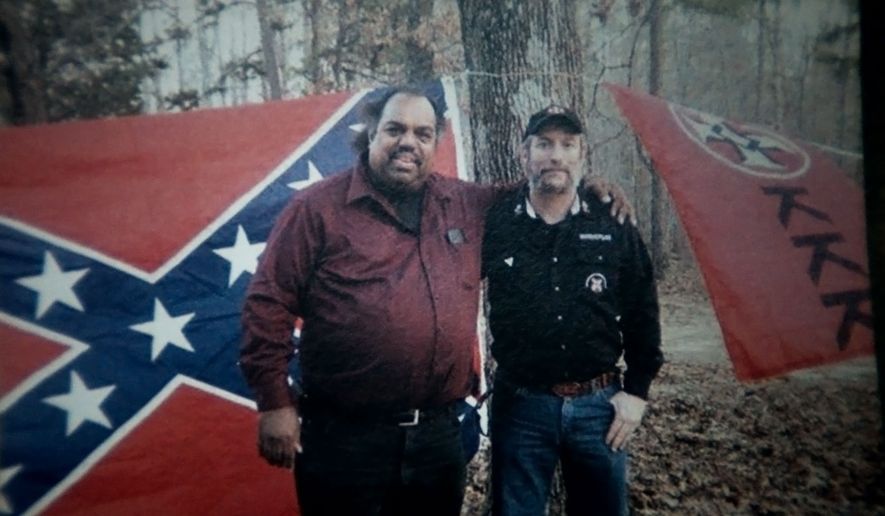
Daryl Davis is a jazz musician, who’s played backup with Jerry Lee Lewis, B.B. King, and a host of other famous musicians. But now he has a new calling. He has, with very deliberate intent, gone out into the world to befriend white supremacists. Daryl Davis is black.


White supremacists scare me and I’m a white guy. I’m intimidated by the KKK. I fear that kind of hate, even when it’s not directed my way. Mr. Davis dives in where angels fear to tread. He talks with these people. They chat about music and the things they have in common. And the relationship grows and friendships are formed. And many of these white supremacists come to see the error of their ways. They surrender their hate. Many have even given Davis their robes; he’s built up quite a collection of them as I understand it.

I preached last week about how we love not just the victim but also the victimizer. This is how it’s done. And maybe that’s how we have peace.

It’s easy to get overwhelmed by the world’s evils. We see how big the problems are and think we can’t do anything. We can’t change the violence between nations or the hate in these mass movements. But there’s that old saying, “You eat an elephant one bite at a time.” Those movements are made up of people. Those nations have millions of citizens. Each of group a collection of individuals. And each individual not all that different from us. Twisted, fearful in ways we are not, but still human.

And maybe that’s Jesus’ point. You don’t win peace by loving the movement. You win peace by loving the person within it. One-on-one. Love, forgive, persist. Love, forgive, persist. Seventy times seven if need be. One person at a time.

It’s better than the alternative. I am not a big fan of Dr. Who (despite the Pizzarusso’s family’s efforts), but there is an amazing scene near the end of the 2015 season. The Doctor has gotten two sides of a feud (one human, one alien) in a room together and he’s pleading with them to stand down their hostilities. He says of war “Because it's always the same. When you fire that first shot, no matter how right you feel, you have no idea who's going to die. You don't know whose children are going to scream and burn. How many hearts will be broken! How many lives shattered! How much blood will spill until everybody does what they're always going to have to do from the very beginning -- sit down and talk!


Jesus’ call for forgiveness, his discipline mechanism in last week’s lesson, the story of Joseph in our First Lesson, are all pleading with us to skip the middle and get to the talking. Skip the violence and talk, like Daryl Davis. Skip the brutality and talk. One-on-one. One person at a time. That’s how you save the world.

That’s how you make peace. Real peace. By talking. By loving. By forgiving. The way Jesus did. Amen.


Monday, September 11, 2017

Sermon for the 14th Sunday after Pentecost

Preached at Grace and Canadochly on September 10, 2017
Scripture text: Matthew 18:15-20

In the classic film Casablanca, Louis, the corrupt Vichy French police officer played by Claude Rains, gets annoyed at the lead character Rick (played by Humphrey Bogart) after he helps a young couple in need. “You’re a sentimentalist.” He accuses Rick, who seems to pride himself on his cynicism and apathy. A man who seems to care for no one and nothing now being accused of caring too much. It’s a ridiculous accusation on the surface.


But, I imagine many of you have seen the film so you know full well that Louis’ insult is correct. Rick is involved in one of the greatest love stories told on film. He does care...deeply, about other people, despite his gruff exterior. His concern allows the rebel leader Victor Lazlo to escape German captivity. His love is strong enough even to let go the woman he loves so she can flee with her husband.


I was thinking about that insult when I was looking over today’s Scripture lessons and it occurs to me that you could very easily accuse me of being a “sentimentalist.” I confess. You’ve got me. I talk about love all the time in these sermons. About God’s love. About our love that we’re meant to have for one another and our neighbor. In fact, you could probably argue that the only people who talk about love more than me are songwriters and romance novelists. One of you, some weeks ago, came up to me after worship and said, “I get the feeling you want us to know God loves us.” Yes, yes, I do.


But as anyone who has been in a long-term relationship with anyone else can attest, love is hard. We’ve all been there. Times when we’re so angry at our spouse we just want to....(insert illegal behavior here). Times when we’re frustrated with our siblings or our parents. Times when our friends are just being idiots about this thing or that. Heh. Sarah’s been out of town most of this week and Emily has taken the absence of her mother as license to push the boundaries a bit. How much can she get away with?
"Where were you?"

"At friend’s house."

"Why didn’t you tell me beforehand? You have a phone. Text me."

"Uh...I forgot."


SMH (as the internet would say). And then there’s the dog. Lucy has contracted some sort of intestinal disorder, so she’s not in complete control of her bowels at the moment. My new town house now stinks of dog mess. ARRRGHH!!!!

I now know why this emoji exists.

I love them both, but...boy, it’s hard sometimes. And these are the ones that the easiest to love. A daughter and a beloved pet. But God calls us to do more. God calls us to love strangers. God calls us to love enemies. God calls us to love people who have hurt us. And that’s all the more harder.


And that is the topic of our Gospel lesson. Here Jesus provides something of a guide on how to love someone who has hurt you. Despite coming from Jesus’ own lips, it’s a not a perfect model. It is not one size fits all, like the church has often claimed it to be. It presumes that two people involved are peers, roughly equals in most ways.


The model falls apart when there is a power differential between them. I cannot use this to call out a politician for the harm their policies have done me, because they have more power than me. A child cannot use this on a parent, because they have more power. And, perhaps most dramatic of all, an abuse victim cannot use this with their abuser. It doesn’t work.


But I’m not sure that was Jesus’ intent. I don’t think this was meant to be the mechanism whereby all disputes between two people can be resolved. But what it does provide for us is a model in spirit of how to go about dealing with such problems. There are actually two goals stated in this procedure as Jesus has outlined it. One is to find reconciliation between the feuding parties. That’s obviously the ideal outcome. The sin is repented and never inflicted again. But there’s another more hidden one. And that’s to never let this agreement turn love into hatred. And that’s what kicks in when things don’t go ideally. When the sin isn’t repented and things continue as they were.


Let such a one be to you as a Gentile and a tax collector.” Jesus says of such people. And how does Jesus treat Gentiles and tax collectors? By loving them. By inviting them into the kingdom. By calling them to repentance. By telling them the Gospel. By healing them. By teaching them. By recognizing that no one, no matter how great their sin, is beyond redemption.


And that’s hard. That’s really hard. But the model Jesus provides also gives us something that makes it a little bit easier. It’s not us alone against our victimizer. Not us alone against our enemy. It’s the whole church there to help. It’s our fellow Christians standing by our side. Love is the goal here. Love for the victim and love for the victimizer.


We love the victim by protecting them. Guarding them. Keeping them safe. We love the victimizer by being the voice that calls for repentance. By telling the victimizer, you cannot do this anymore. It is not acceptable. It is not right. It is not just.


We love people of color by trying to change our racist society, by standing with them in the midst of their trials. And we love the people of the KKK by calling them to change their ways and surrender their hate. That’s hard.


We love the people victimized by ISIS by allowing them to flee to our country as refugees, by giving them food, shelter, and safety. And we love the people in ISIS by showing them the error of their ways and allowing them to surrender their hostility and anger. That’s hard.


We love the battered spouse by getting her to safety, by providing for her needs. And we love her abuser by telling him “This is not acceptable. You cannot do this to people,” and demanding they change. That’s hard.


It’s hard because it doesn’t always work. It’s hard because people don’t easily repent. It’s hard because hate, anger, vice, and violence are addictive in their own ways. It’s hard because people are selfish. We hate being wrong. We feel all our actions, even our worst vices, are somehow justified. And if we’re so reluctant to give up our worst behaviors, so too are they.


Let such a one be to you as a Gentile and a tax collector.” We’re called to keep trying, to do what we must for the sake of those we are called to love. And we are called to never let our frustration with them grow into anger or hatred. All that is hard. But it’s who we’re meant to be.


Martin Luther King, a man who knew a thing or two about being abused and victimized by others, once gave a sermon on loving your enemies.


He talked about how hard it is to love one’s enemies when they spit in your face, when the sic the dogs on you, when they knock you off your feet with fire hoses. But, he said there are reasons to love even in the midst of that. “The first reason,” he said, “that we should love our enemies, and I think this was at the very center of Jesus’ thinking, is this: that hate for hate only intensifies the existence of hate and evil in the universe.” None of us want that.


He also said, “There’s another reason why you should love your enemies, and that is because hate distorts the personality of the hater...You can’t see straight when you hate. You can’t walk straight when you hate. You can’t stand upright. Your vision is distorted. There is nothing more tragic than to see an individual whose heart is filled with hate... For the person who hates, the beautiful becomes ugly and the ugly becomes beautiful. For the person who hates, the good becomes bad and the bad becomes good. For the person who hates, the true becomes false and the false becomes true. That’s what hate does.”


He also said. “Now there is a final reason I think that Jesus says, "Love your enemies." It is this: that love has within it a redemptive power. And there is a power there that eventually transforms individuals. That’s why Jesus says, "Love your enemies." Because if you hate your enemies, you have no way to redeem and to transform your enemies. But if you love your enemies, you will discover that at the very root of love is the power of redemption. You just keep loving people and keep loving them, even though they’re mistreating you. Here’s the person who is a neighbor, and this person is doing something wrong to you and all of that. Just keep being friendly to that person. Keep loving them. Don’t do anything to embarrass them. Just keep loving them, and they can’t stand it too long. Oh, they react in many ways in the beginning. They react with bitterness because they’re mad because you love them like that. They react with guilt feelings, and sometimes they’ll hate you a little more at that transition period, but just keep loving them. And by the power of your love they will break down under the load. That’s love, you see. It is redemptive, and this is why Jesus says love. There’s something about love that builds up and is creative. There is something about hate that tears down and is destructive. So love your enemies.


Wise words from a man who had every reason to hate, but chose not to. He modeled his savior, who from the very cross cried out “Father, forgive them.” That is who we are called to be, no matter how hard. Amen.

(Pastor's Note: The MLK sermon I quote above is his sermon preached at Dexter Avenue Baptist Church, Montgomery, Alabama, on 17 November 1957. It's well worth the read or, better yet, the listen.)

Tuesday, September 5, 2017

Sermon for the 13th Sunday after Pentecost

Preached at Grace and Canadochly on September 3, 2017
Preaching text: Matthew 16:21-28

Last Sunday, as you’ll recall, I took issue with two variant interpretations of Christianity. I called out by name Joel Osteen and those like him who preach a prosperity gospel, the idea that God is merely a means to an end, little more than a path to riches and success. I also called out Christian fundamentalism, with its focus on exclusion and self-righteousness, seeing God as little more than a cruel judge of those who don’t measure up to the fundamentalist standard.

I think I preached that sermon a week too early, because both groups got plenty of press this week, much of it focused EXACTLY on what I find so problematic about both groups.

Osteen, of course, has had the most press. His massive mega-church, which can seat nearly 20,000 people, is located in the heart of Houston, TX, right smack dab in the middle of the nightmare that is Hurricane Harvey. The fourth largest city in our country has been bombarded with rain and flooding the likes of which even Noah has never seen. People are in desperate need of shelter from the storm and the floods. And here, at a time when the church could do tremendous good for people in need, Osteen’s church was locked up tight. It opened only after a massive outpouring of shame was heaped upon Osteen for his heartlessness.


That shouldn’t surprise anyone. When your God is money and success, what do you do with suffering and need? Are they not, in their theological understanding, proof positive of God’s displeasure? Why help them when they’re getting what they deserve? Failure is for losers and those out in those flood waters are clearly losing.

Meanwhile, a coalition of fundamentalist Christians released this week what is called the Nashville Statement, their manifesto against any and all things LGBTQ. This didn’t get nearly as much press as Osteen, but it is not much different in spirit than his locked doors. Stay out, gay people. We don’t want you. And if you come, be prepared to be treated as second class Christians at best, pariahs at worst. God’s judgment is upon you. Repent of your inborn sexuality or else.

A manifesto of hate. If you’re not like us, if you’re one of them or someone who dares support one of them, then you can (quite literally) go to hell.

I could not have asked for two better examples of precisely why I feel these sorts of churches do not know Jesus. Who do say that I am? Sadly, it does not seem to be the Christ of the Gospels.

Our Gospel text today highlights precisely who the Christ of Gospels truly is. Yes, Peter has staked his claim in his confession from last week, but even he doesn’t quite grasp fully who and what Jesus is. Now Jesus explains in fullness what this is all about. “From this time on, Jesus began to show his disciples that he must go to Jerusalem and undergo great suffering at the hands of the elders…” To be the Christ, the son of the living God, is to go to the cross, die, and then rise again on the third day.

Peter, of course, won’t have it. To die is to be defeated, to fail, to be overcome by the evils we good people are meant to stamp out. No, that’s the world’s way of thinking. Jesus has come to show us God’s way of thinking. Peter would not be alone. To Osteen, death is losing. There is no losing when holiness is success, wealth, and power. To those who signed the Nashville Statement, death is defeat. Evil cannot triumph. We’re the good guys, we’re better than those horrid sinners. They can’t win.

Nor would these two groups be the only ones guilty of thinking like Peter. How often do we see death as failure or loss? How often do we see faith as a means to success or victory over our worldly enemies (real or imagined)?

If so, we've utterly missed the point. It’s not about winning or losing. It’s not about my success or my triumph over those different from me. It’s about saving the whole world. It was always about saving the whole world. It is STILL about saving the whole world.

Remember again that text I frequently quote from Genesis. Genesis 12:3. “I will bless those who bless you and the one who curses you I will curse and in you ALL THE FAMILIES OF THE EARTH SHALL BE BLESSED.” That, right there at the very beginning of the story of God’s people, is the purpose of Jesus: to be that blessing that will be for all the world.

And that’s why he does what he does. It’s why Jesus was born. It’s why he lived and taught and performed his miracles. It’s why he does go to the cross and undergoes great suffering. And even in the midst of his greatest pain, he speaks a word of mercy and compassion. “Father, forgive them.” He dies and on the third day, he does rise again.

Everything Jesus is about is his mission to save the world. That’s who he is. That’s what he’s about. I chuckle every now and then, because on my Facebook feed will come this advertisement for a t-shirt that shows Jesus surrounded by all these superheroes: Batman, Spiderman, the Hulk, you name it. And there’s a speech bubble above Jesus’ head and it reads “And that’s how I saved the world.” I love it. That’s him. That is who he is.


And, as the verses that follow imply, that is who we are to be also. We too must take up our cross and do all that we can to save the world. Now we don’t have duplicate Jesus’ sacrifice. His salvation is won and that part is done and complete. But we have this moment, here and now, in a dying and hurting world. What are we going to do to follow our savior? What are we going to do in this moment right now to save the world for someone in need?

Heh, I said last week that “What now?”, our fundamental question, followed directly from Jesus’ question of “Who do you say that I am?” Here you see that. Christ gave his whole self for the sake of those he loved and calls us to do the same. Houston is underwater. People are saying “black lives matter” because so many black lives are being killed. There is war in Syria, Iraq, Afghanistan. The KKK and the Nazis are arising anew. There is no lack of work for us to love those who need love. No lack of work for us to feed those who need fed. The Gospel needs to go forth. The world needs it. The world needs to know of the Christ who came to save it. What are we going to do about that? Amen.


Tuesday, August 29, 2017

Sermon for the Twelfth Sunday after Pentecost

Preached at Grace and Canadochly on August 27, 2017
Preaching text: Matthew 16:13-20

“Who do you say that I am?”


I spend a lot of time in these sermons on the topic of questions. You have heard me say on numerous occasions I consider the question “What now?” to be the most important question we Christians must ask ourselves. We are saved. We are the chosen. We are called by God. What now? What do we do with this grace that we’ve been given? How do we live our lives in the midst of this truth and faith that we have? I spend a lot of time and energy guiding you, as best I feel I can, to answer that question.

But today, we confronted with a different question. And in some ways, it is even more elementary, even more fundamental, than “What now?” It is the question Jesus asks of his disciples when they visit Caesarea Philippi. “Who do you say that I am?”

You see, “What now?” in all its various forms and manifestations comes out of our answer to “Who do you say that I am?” One follows from the other. How we see Jesus defines how we try to follow him. And if “What now?” is the most important question we Christians ask of ourselves, then “who do you say that I am?” is probably the most important question Jesus asks of us.

And in these troubled and chaotic times, we may be due for a trip back to the basics. Back to Christianity 101. Back to the elementary level. Back to the question of Jesus’ identity and what that means for us.

Because, while one would think that every Christian everywhere would have the same answer to Jesus’ question, that we’d all answer like Peter did, it is increasingly clear that is not true. That across the Church, there are many who would answer Jesus’ question very differently that Peter or ourselves.

Every Sunday, even now as we speak, Joel Osteen and the other Prosperity preachers are telling their flocks that to follow Jesus with devotion and commitment is a sure-fire way to health, success, wealth, and popularity. When Money is God, Jesus is the path to riches. That’s who they say he is.

His response to Hurricane Harvey (or lack thereof) is proof of his true character.

When Money is God, the uber-wealthy are the Saints. And how much is our supposedly Christian society structured on that belief? What’s the old joke? “If you want to steal $1000, rob a bank. If you want to steal $1,000,000, start a bank.” That’s probably a little unfair to honest folks working in the banking industry, many of whom I've had in my pews at my congregations. Perhaps the original quote on which the joke is based is better. From the Chinese philosopher Zhuangzi, “The petty thief is imprisoned but the big thief becomes a lord.”

When Money is God, that’s how the world works. Is that who Jesus is? Is that what this is all about? Did he come to tell us of the Cosmic Santa Claus, that if we only pray hard enough and believe devoutly enough, our lives would be showered with worldly blessings and we would be as gods and kings here on Earth?

Also, in some churches right now, there are preachers who are declaring that Jesus only came to save people like them. Only people who believe precisely the same theology as they do. Only people who worship the same way they do. Only people who avoid the same sins that they do. Only those who have the same political leanings as they do. And, in its most extreme form, only people with the same skin color as them. When self-righteousness and self-superiority is God, Jesus is the fiery judge who will damn and destroy all those outside the fold. That’s who they say he is.

Unpleasant truth: Every person in this picture considers themselves "Christian."

When self-superiority is God, the saints are the haters. Those who appoint themselves judge, jury, and executioner over their fellow human beings. The Inquisitor or whatever form he takes in these times is the paragon of faith. And how much is our supposedly Christian society structured on this belief? With politicians trying to declare illegal those love in less popular ways and those who are determined to imprison people of color for crimes white folks get a slap on the wrist at most. When every Black kid is a thug and every white kid an angel.

Who do you say that I am?

Peter says, “You are the Anointed One, the son of the living God.” “Blessed are you,” replied Jesus, “Simon, son of John, for flesh and blood has not revealed this to you, but my Father in heaven. I tell you, you are Peter and on this rock I will build my Church.” And what rock is that? It is the rock of recognizing Christ’s true identity. He is the son of God. He is the one who has come into the world to save it.

He is bigger than money. He is greater than our delusions of superiority. He is better than our hate and our greed. Our selfish gods that glorify our baser desires are too small and petty to be who Jesus is. He is far greater than we can imagine.

Because only he can transcend those base designs of the human heart, what we call sin. And because he can do that, he is the only worthy to go to the cross and die for the sake of humanity. For the sake of us selfish unworthy humans. And he does this willingly, perhaps even eagerly. Why? Because, for all our faults, Jesus loves us beyond reckoning.

That’s a better god than money. That’s a better god than my own selfish prejudices. That’s a god who died for me because he loves me that much. What’s money ever done for me? There’s never enough of it when I need it. There’s always more than enough Jesus when I need him. What’s arrogance and hate ever done for me? All it’s ever done is turn off the people I love, chase them off, sent them away. Jesus will never leave me.

And what’s true for me is true for all of us. The son of the living God loves each and every one of you beyond compare. He died for you. He rose again for you. He gives you life eternal out of his immense and immeasurable love. That’s who I say he is. And you? Amen.


Sermon for the Funeral of Joan Dietz

Preached at Etzweiler Funeral Home on Saturday, August 26, 2017
Preaching Text: Acts 9: 36-42

I met with Jim and Jason on Thursday to discuss Joan and her life. And since I arrived here about an hour ago, I've heard even more stories. Stories of her sense of humor and, of course, a picture tells a thousand words and there are many of those gathered here as well. Pictures of vacations, birthdays, weddings, and other family events.

I have to admit thought I could have lived without seeing Jim's audition photo for the 1970s comedy "Chico and the Man." Rocking that "Disco 'do" as he was. Still, Joan would have liked a bit of playful teasing. She would have liked a bit of laughter in this midst of this moment, because that's who she was.

But the stories that have stood out the most are those of her kindness and compassion, stories of how she’d make food for people in need, of how she’d do anything for anyone who needed help. As those stories are told, we've discovered new ones; of a time when she paid the down payment on a house for a couple in need, a story unknown to her family until just a few minutes ago.

People express their faith in different ways. Each one of us here has our own personal theology and practice when it comes to what we believe. So too with Joan. She was not, as Jim reminded me, much of a church-goer. But her faith was clearly very important to her. Her church was charity. Her worship was compassion and generosity to others. Her prayer was service to people in need.

Honestly, the kingdom of God could use more people like her. Folks who put their money where their mouth is. People who DO the work of God. I know I am blessed as a pastor to have Jim and Amy among my flock, folks who are clearly carrying on Joan has taught them.

But as I was listening I realized that Joan was of a type hardly unique in the life of the greater Church. She reminded me very much of Dorcas, whose story from the book of Acts I just shared with you.


Here again, many centuries ago, was a woman in much the same mold as Joan. Self-sacrificing, kind, generous, a “sweetie” to the many widows in the city of Joppa. Dorcas’s talent was in sewing, so she made clothing for those in need. But then, rather suddenly, she took ill and died. Hearing that St. Peter was in a neighboring town, they sent for him. Peter traveled the distance between the towns and came to where Dorcas was laying. There, he laid his hands on her and commanded her to rise. And she did.

John the Evangelist, who wrote the fourth Gospel, calls all of Jesus’ miracles “signs.” He uses that word very intentionally, as he sees the miraculous as something that points to the truth of God’s kingdom, in much the same way a road sign will point a traveler towards a particular destination. You want to see what God’s kingdom is like? Look to the signs.

And while this is a miracle of Peter’s rather than Jesus, I think it still proves true. This is a sign of the kingdom and it is a sign for us here gathered today.

You see Jesus came to this Earth to show us a kingdom of God where life rules, where kindness is the order of the day, where sorrow and pain no longer exist.  He came and he told his followers to tell and to SHOW others what that kingdom looked like. That’s what Peter did with his miracle, but it’s also what Dorcas did with her charity. AND it’s clearly what Joan did throughout her life.

ALL of them knew that God’s kingdom is our hope. Peter’s miracle is proof of that. He brought back from the dead someone we might think was gone forever. That’s the kingdom. That’s what Jesus came to do. And on the cross and through the empty tomb, he won that kingdom for us.

Joan has received her reward. She has entered into the fullness of the kingdom she proclaimed with every kindness and act of charity of her life. This is God’s gift to her. And God’s gift to us is the same thing. We too are given this kingdom, this place of kindness, peace, harmony, where death and sin and sorrow are no more. A place of joy and celebration.

So, in this moment here and now, I know many are full of sorrow. Joan will be deeply missed. But her life was a sign of things to come, a world beyond ours where all of God’s promises will be fulfilled. Be like Joan. Trust in those promises. Share those promises. And hope for a better tomorrow. Amen.

Monday, August 21, 2017

Sermon for the Eleventh Sunday after Pentecost

Preached at Canadochly and Grace on August 20, 2017
Preaching text: Matthew 15:10-28

The first half of our Gospel text today contains what was, in my teenage years, probably my favorite verse in all of Scripture. It was my shield, my defense, against my detractors. You see, in West Virginia, there is a peculiar and very strong strain of pietism in Christianity. Regardless of denomination, there were just some things you didn’t do if you were a “good Christian boy.”

For instance, you didn’t listen to rock-n-roll music. That would turn you gay and make you into a devil worshiper. You didn’t read certain books like Lord of the Rings or Conan the Barbarian (or, a generation later, Harry Potter) because that would turn you gay and make you into a devil worshiper. You didn’t study “evil-ution” in school because that would turn you gay and make you into a devil worshiper. You certainly didn’t play Dungeons and Dragons because…well, you get the picture. I did all those things.

Jack Chick's cartoon idiocy was quite popular back home.

Now it’s easy to laugh at the obvious homophobia and paranoia of their interpretation of Christianity, but to them it is deadly serious. In the early 1970s, in an effort to protect the youth of WV from corruption, riots broke out over certain textbooks in use in the schools. People were hurt, books were burned, and things were very very ugly for a time. 


And it hasn’t changed much. When I took a group of youth to a Christian rock concert in Charleston from my church in Davis just a few years ago, we ran into protesters who claimed yet again that listening even to Christian rock would turn us gay and make us worship the devil.


But, in my defense, I had the words from Jesus himself. “It is not what enters a man that defiles him.” I felt I had good standing here and still do. After all, I’m not gay and even if I were it wouldn’t be because of one too many D&D games. It would be because I was born that way. And I’m certainly not a devil worshiper. I love my Jesus now as much as I ever have.

But I have to confess that recent events have challenged my interpretation of this text and those like it in the other Gospels. Well, speaking of being born a certain way, I know darn well those people who marched through the streets of Charlottesville last weekend were not born with hatred in their heart for those different from them. That crap was learned. And it was learned by what they took in. It was what entered into them that made them that way.

So am I wrong? Should I read Jesus more literally here? Since it is, in Matthew’s recording, that which “goes into the mouth” that does not defile and I certainly did not eat my books, CDs, and games. Is this really only about food and unwashed hands? No, I don’t think so. Jesus himself points out that it’s what’s in the heart that determines what comes out of a person. So what’s the difference between the ones marching in the streets for hate and myself?

Not a whole lot actually.

I’ve done a lot of reading on the origins of the so-called Alt-right movement and a big chunk of the followers of that movement are, for lack of a better way to describe them, nerds. Like me. People who did all those same things I did as a youth: played D&D, read and watched stories of brave knights and beautiful princesses in great distress, devoured sci-fi: Star Trek, Star Wars, Dr. Who, you name it. Grew up believing, as so many do, that courage, hard work, tenacity would all be rewarded in the end. That they’d get the great job, win the girl, and live happily ever after.

And then real life came crashing down on them like an avalanche. Real life is not a fairy tale and these folks discovered, as I once did, that life does not hand you anything no matter how deserving of it you think you are. Women are not vending machines into which you can drop coins of kindness and wit and then sex and romance come out. Good jobs are scarce in this economy and even with hard work you may not land them.

I had to learn all those lessons. Ask any of my ex-girlfriends how entitled I felt I was to them because I was a “nice guy.” Ask my college sophomore self how unfair it was that I was still flunking out of Computer Science despite the long hours of work I’d put in. I watched my whole life fall apart that year. Everything I thought I was going to be gone in a few short months.

According to Eric Hoffer’s book The True Believer, it’s people in those very circumstances that are ripe for recruitment into mass movements. People who believe their lives are utterly and irredeemably broken. And that’s why so many of those nerds fell in with the alt-right and the hatemongers in Charlottesville. But why didn’t I? It’s not like those sort of charlatans and neo-Nazi groups and so forth didn’t exist in the 90s too. That was the era of Ruby Ridge and Oklahoma City. Why didn’t I become like them?

Because I chose not to. What was in my heart, along with all the anger and despair at how life had treated me, was also Jesus. And that part of me compelled me to choose differently. I choose the good, as best I could. The execution of that choice could have been better; I wasn’t perfect then and I certain am not now. But I strove for the good, despite the temptations otherwise.

And maybe that’s why Matthew pairs Jesus’ discussion of what does and does not defile with the story of the Canaanite woman. What goes into this woman but insults and rejection? Even Jesus himself responds to her with cruelty and disdain. But I believe he does that for a reason. He knows what’s in this woman’s heart. He knows that pouring hate and rejection into her will not stop her from choosing the good. It will not stop her from choosing Jesus even when Jesus himself seems to say no.


And he’s right about her. She chooses to follow. She chooses to believe. She chooses to turn Jesus’ own words back on him. “You don’t throw the children’s food to the dogs? Fine. I’ll just take a crumb, just like the dogs would get. That’s all I need to save my daughter.” She does not disappoint him. Her faith is strong and she chooses Jesus even in the face of his rejection. What a powerful demonstration of faith.

You can almost imagine Jesus walking away from this scene with a certain smug satisfaction. “You wanted to know what I meant about what does and does not defile. Look to that woman. I insulted her, heaped disdain and rejection upon her and yet still she called upon me for aid. Her heart is pure no matter what I or anyone else tried to put inside her. Do likewise. Be like her.”

We are confronted with myriad choices every day. And there are forces of evil about that want our allegiance. And we’ve seen how they work. They tear people down, beat and abuse them. Convince them of their worthlessness and say to them their only choice to redeem themselves is to follow evil. From the marchers in Charlottesville to the greedy-beyond-measure CEO in the halls of power, we’ve seen how these choices are made. But we here gathered have chosen differently. We have chosen Christ even as life has done its worst to us. We have chosen the one who has said we are not worthless; that we are more precious than all the wealth in the world. That we are worth dying for.


That’s who we are and we have also been called to make others like us. These ripe times for the church; the harvest truly is ready. We have seen with our own eyes the vast numbers of lost souls convinced the meaning in life can be found in hate, rage, greed, gluttony, and lust.  We have an alternative to all those things. We have a better choice. But they will only know if we show them. Amen.